
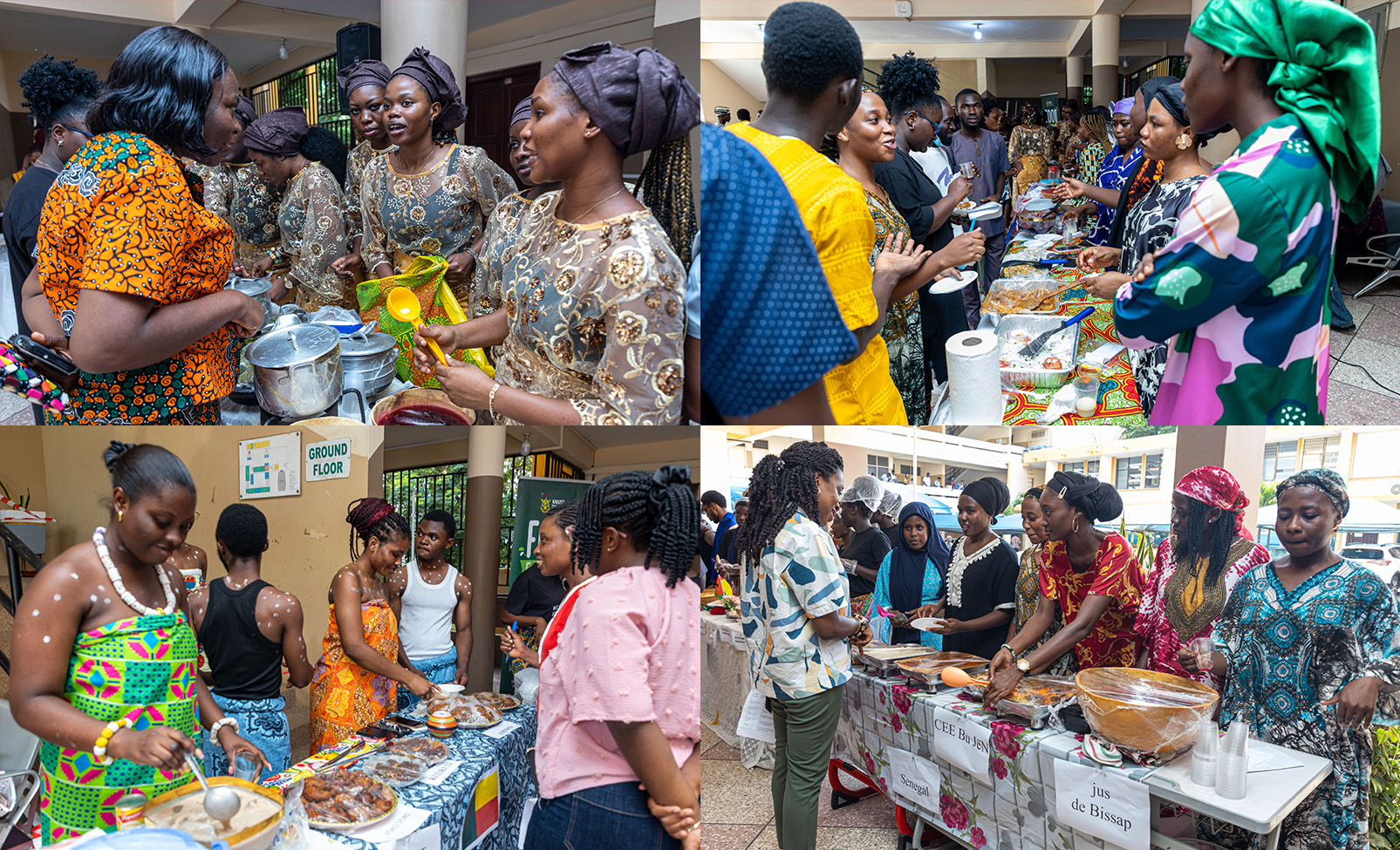
Second-year students of the Department of Food Science and Technology at the Kwame Nkrumah University of Science and Technology, Kumasi (KNUST), have showcased the culinary heritage of selected West African countries at a Traditional Foods Exhibition.
The exhibition, held at the foyer of the Allotey Auditorium as part of the students’ Traditional Foods and Nutrition course, featured traditional meals, snacks and beverages recreated to reflect the food cultures, beliefs and traditions of selected West African countries.
The students presented their assigned countries and explained the cultural significance of the foods they prepared.
Student groups represented Togo, Benin, Burkina Faso, Senegal, Guinea-Bissau, Mali, Liberia, Nigeria and Sierra Leone, researching the food culture of each country before preparing traditional meals and beverages.
The foods included Akoume from Togo; Amiwo from Benin; Zonkom and Riz Graz from Burkina Faso; Mafe and Cee Bu Jen from Senegal; Kumbamba and Raivas from Guinea-Bissau; Tiguadege Na from Mali; Chuck Rice and Ginger Juice from Liberia; Amala, Kunu Aya, Chinchin and Moin Moin from Nigeria; and Banana Akara, Plasa and Rice, Ginger Beer and Tombe Juice from Sierra Leone.

Dr Nana Baah Peprah-Ameyaw, a lecturer in the Department of Food Science and Technology, commended them for their efforts and said the exhibition was intended to deepen their understanding of African culture beyond food.
“These students have not just recreated traditional food, but have studied the culture, the history and the taboos that make us African,” he said.
He said that while food was an important part of the exhibition, understanding the cultural knowledge behind the dishes was equally significant.
“What is more important than the food that we are about to experience from you is the history and the culture of these places that you have studied,” he added.
Dr Peprah-Ameyaw said the annual traditional foods class adopts a different theme each year. He said the previous edition focused on Ghanaian foods, with students exploring dishes from different regions of the country.
He encouraged the students to appreciate the cultural significance of the foods they had studied and to recognise food as an important expression of African identity.
Dr Peprah-Ameyaw congratulated the students on their dedication and said he looked forward to their presentations on the stories and cultural significance behind the foods they had prepared.
Visitors toured the exhibition stands, where students explained the origins of their dishes, traditional preparation methods, nutritional benefits and cultural significance. The students were also dressed in traditional clothing representing their assigned countries.
Head of Department, Professor Faustina Wireko-Manu encouraged the students, as emerging food scientists, to apply their technical knowledge to improve the shelf life and marketability of traditional foods.
“We shouldn't look at it as a show. We should take something from it, take a business out of it,” she advised.
She urged the students to explore food processing, preservation and packaging technologies to make traditional foods more accessible to consumers beyond their immediate communities.
“As food scientists, you can think of how you can make it shelf-stable or use packaging to bring it onto the market and to larger markets, so that people can enjoy it whilst you also get a job,” she said.
Professor Wireko-Manu further encouraged the students to consider the entrepreneurial potential of traditional foods, saying innovation and forward-thinking could create employment opportunities and expand the reach of African cuisine.
Reflecting on the exhibition, she praised the students for the quality and presentation of the foods and described the taste of the meals and beverages as excellent.
She also highlighted similarities between some of the dishes prepared by the students and familiar Ghanaian foods, saying the exhibition demonstrated the connections among African culinary traditions.
Story: Alice Laura Kyerewaah Prempeh Photos: Isaac Kwaku Duah


